

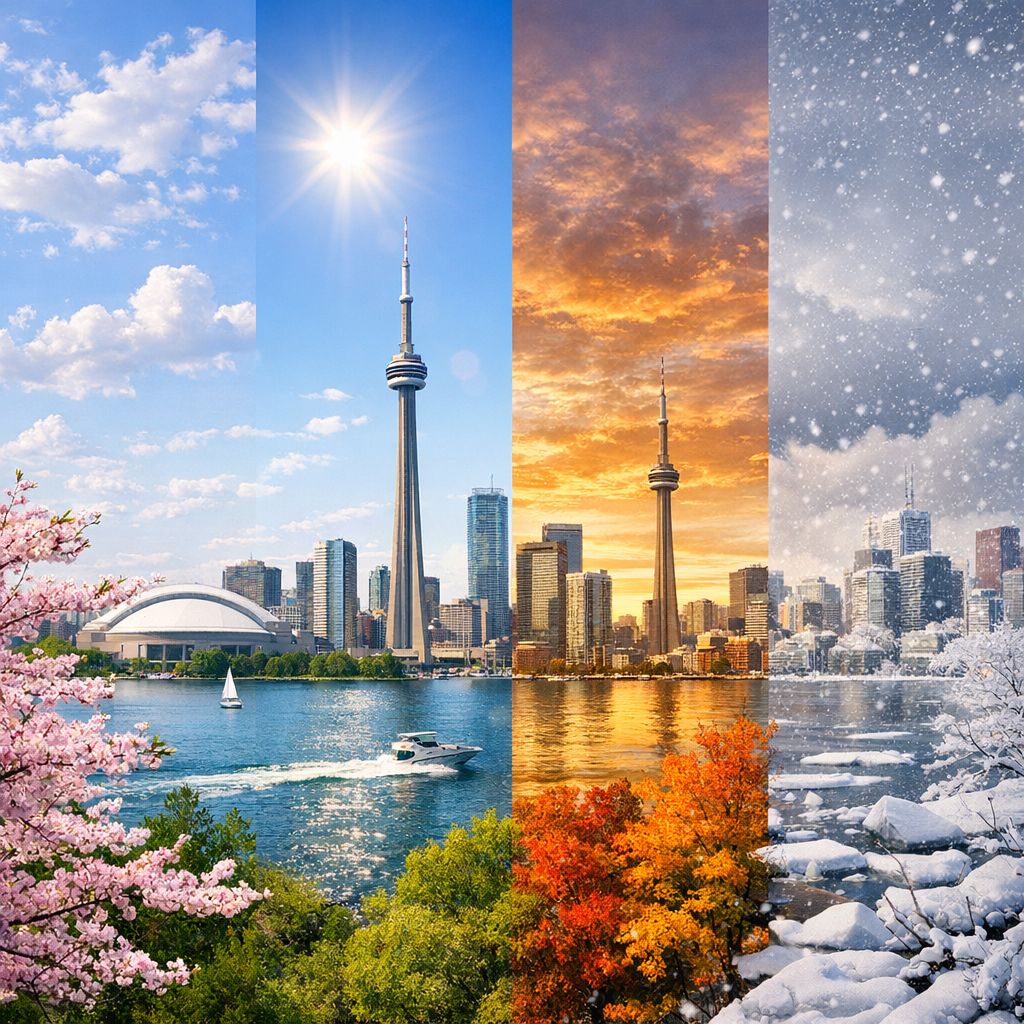
Toronto’s climate is characterized by four distinct seasons, each offering unique weather patterns influenced significantly by its proximity to Lake Ontario.
Winter (December – March)
Winters in Toronto are cold and snowy. Average temperatures hover around -1°C to -3°C, but wind chills can make it feel much colder. Snow is common, with accumulations typically present from mid-December to mid-March. The lake’s moderating effect can lead to milder temperatures compared to inland areas, but also contributes to increased humidity, making the cold feel more penetrating.
Spring (April – May)
Spring is a transitional season with unpredictable weather. Temperatures can swing rapidly, ranging from chilly conditions in early April to milder weather by May. Rainfall is frequent, and occasional late snowfalls can occur in April. The lake’s influence can delay the onset of warmer temperatures, resulting in cooler conditions along the waterfront compared to inland areas.
Summer (June – August)
Summers are warm and humid, with average highs around 25°C. Humidex values often make it feel warmer, sometimes exceeding 30°C. Thunderstorms are common, especially in the afternoons. The lake provides a cooling effect, particularly noticeable along the waterfront, where temperatures can be several degrees cooler than in the city’s core.
Fall (September – November)
Fall brings cooler temperatures and vibrant foliage. September often retains summer-like warmth, but by November, temperatures can drop sharply. The lake’s moderating effect can result in milder conditions during early fall, but as the lake cools, its influence diminishes, leading to more rapid temperature declines.
Lake Ontario’s Influence
Lake Ontario plays a crucial role in shaping Toronto’s climate. In winter, it can moderate temperatures, preventing extreme cold but increasing humidity. In summer, it provides a cooling effect, especially noticeable along the waterfront. However, this can also lead to temperature disparities between the lakeshore and inland areas, particularly during spring and early summer.
Understanding these seasonal patterns and the lake’s influence can help residents and visitors prepare for Toronto’s diverse weather conditions throughout the year.