

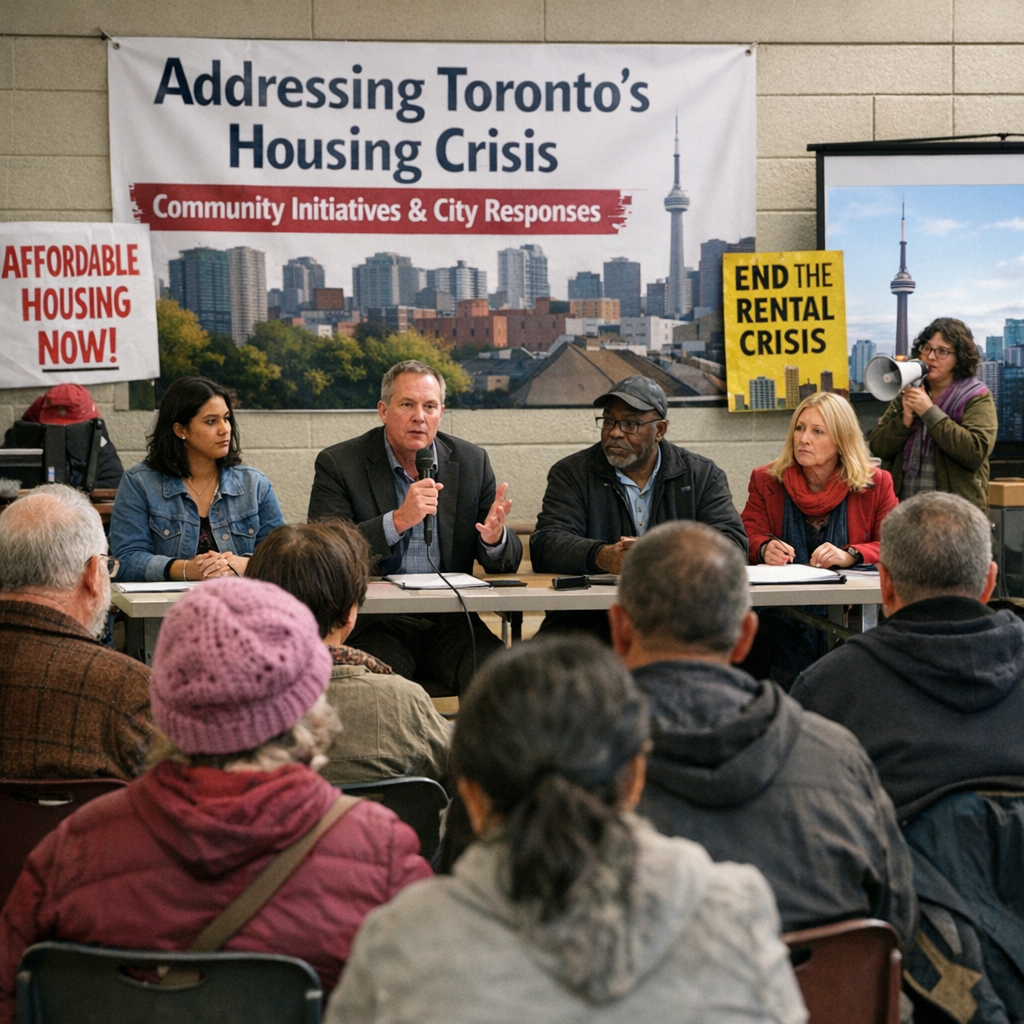
Toronto’s housing crisis remains a pressing issue, with rising homelessness and affordability challenges affecting many residents. Recent data from the City’s 2024 Street Needs Assessment highlights a significant increase in homelessness, estimating over 15,000 individuals experiencing homelessness, including 1,615 living outdoors. The primary causes identified include lack of income, relocation, conflicts with partners, mental health issues, and unsafe housing conditions. [Source]
Community-Led Solutions
In response, various community organizations have initiated programs to support those in need. Community Fridges Toronto (CFTO) has established a network of public fridges offering free food, aiming to provide mutual aid to individuals facing food insecurity. As of May 2022, CFTO operates eight fridges across the city. [Source]
Similarly, the Toronto Little Free Pantries Project, launched in April 2020, has set up approximately sixty little free pantries throughout the city, offering non-perishable food items to those in need. [Source]
City Initiatives
The City of Toronto has also implemented measures to address these challenges. The Downtown East Action Plan focuses on coordinating services to tackle issues related to poverty, homelessness, community safety, mental health, and substance use in the Downtown East area. The plan aims to create safe, welcoming, and inclusive communities through collaboration and targeted investments. [Source]
Additionally, the Toronto Community Crisis Service (TCCS) was launched as an alternative to police response for mental health crises. In its first year, TCCS received 6,827 calls, successfully resolving 78% without police involvement. This initiative has been recognized for strengthening community safety efforts and improving outcomes for marginalized communities. [Source]
Ongoing Challenges
Despite these efforts, challenges persist. The 2026 State of Repair Report by Toronto ACORN indicates that issues like cockroach infestations and delayed maintenance requests remain prevalent among tenants. The report suggests strengthening the City’s RentSafeTO program to ensure better living conditions for renters. [Source]
Furthermore, the Toronto Ombudsman’s 2024 Annual Report revealed a 43% increase in cases, indicating a growing demand for accountability in local government. Common issues included poor communication and inconsistent information from City staff. [Source]
Addressing Toronto’s housing crisis requires a multifaceted approach, combining community-driven initiatives with robust city policies. Continued collaboration and investment are essential to create a more equitable and livable city for all residents.