

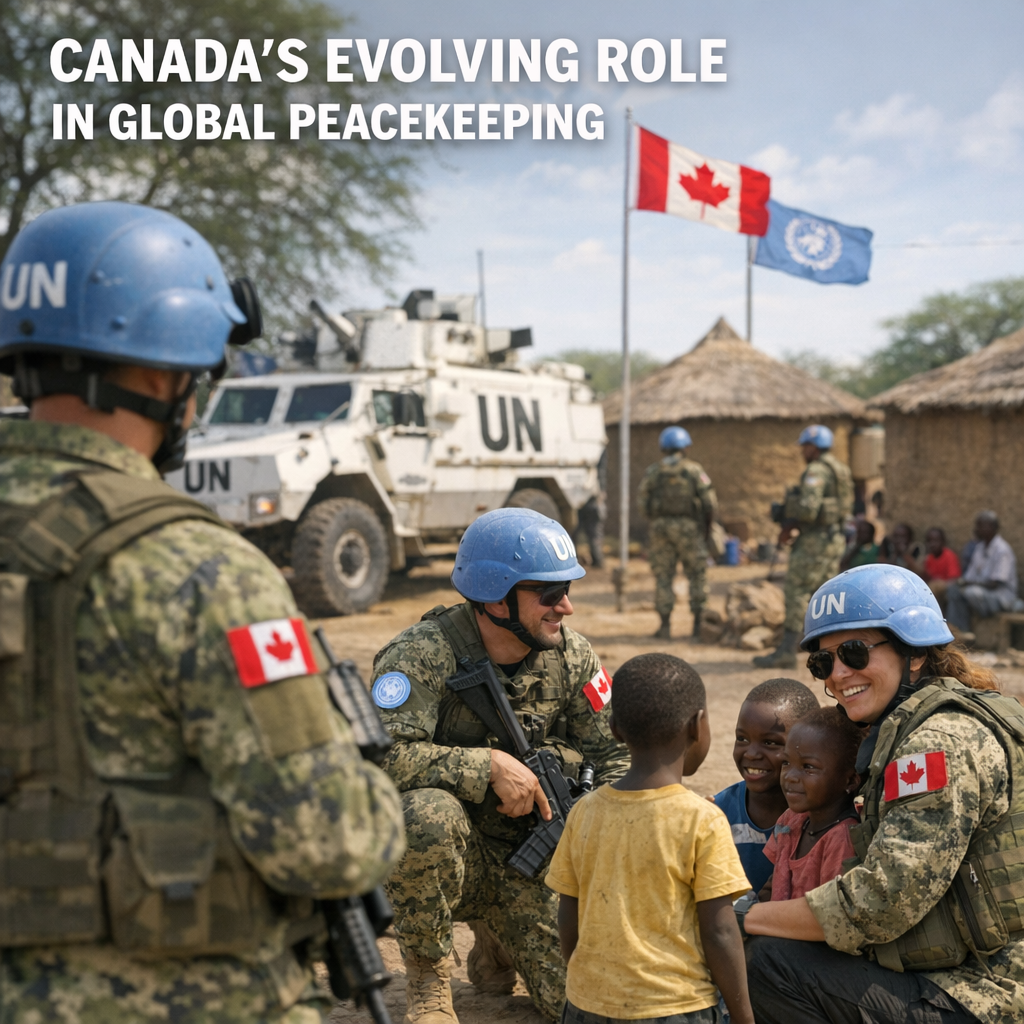
Canada has a storied history in international peacekeeping, with its involvement dating back to the mid-20th century. The nation’s commitment to global peace and security has been a defining aspect of its foreign policy, reflecting values deeply held by Canadians.
Historical Contributions
In 1956, during the Suez Crisis, Canadian Secretary of State for External Affairs Lester B. Pearson proposed the first large-scale United Nations (UN) peacekeeping force, earning him the Nobel Peace Prize. This initiative marked the beginning of Canada’s active participation in UN peacekeeping missions. Over the decades, more than 125,000 Canadians have served in over 50 peacekeeping operations worldwide, with approximately 130 making the ultimate sacrifice. These missions have ranged from monitoring ceasefires to providing humanitarian aid in conflict zones.
Current Engagements
As of 2026, Canada’s direct involvement in UN peacekeeping missions has evolved. The Canadian Armed Forces (CAF) currently deploy personnel to several UN operations, including those in the Democratic Republic of the Congo, South Sudan, Cyprus, and the Middle East. These deployments often involve specialized roles such as military observers and staff positions.
Beyond personnel contributions, Canada remains a significant financial supporter of UN peacekeeping efforts. In 2025, the country pledged over $40 million CAD to support peacekeeping initiatives for the 2025-2027 period. Additionally, Canada is the eighth-largest contributor to the UN peacekeeping budget, underscoring its ongoing commitment to global peace and security.
Challenges and Future Directions
Despite its historical leadership, Canada’s current peacekeeping footprint is modest compared to its past engagements. This shift reflects changes in global conflict dynamics and Canada’s evolving defense priorities. Experts suggest that to rejuvenate its peacekeeping legacy, Canada would need to reassess its military commitments and consider increasing both personnel and resource contributions to UN missions.
In conclusion, while Canada’s role in global peacekeeping has transformed over the years, its foundational commitment to promoting international peace and security remains steadfast. The nation’s future in peacekeeping will likely involve balancing traditional roles with new approaches to address contemporary global challenges.