

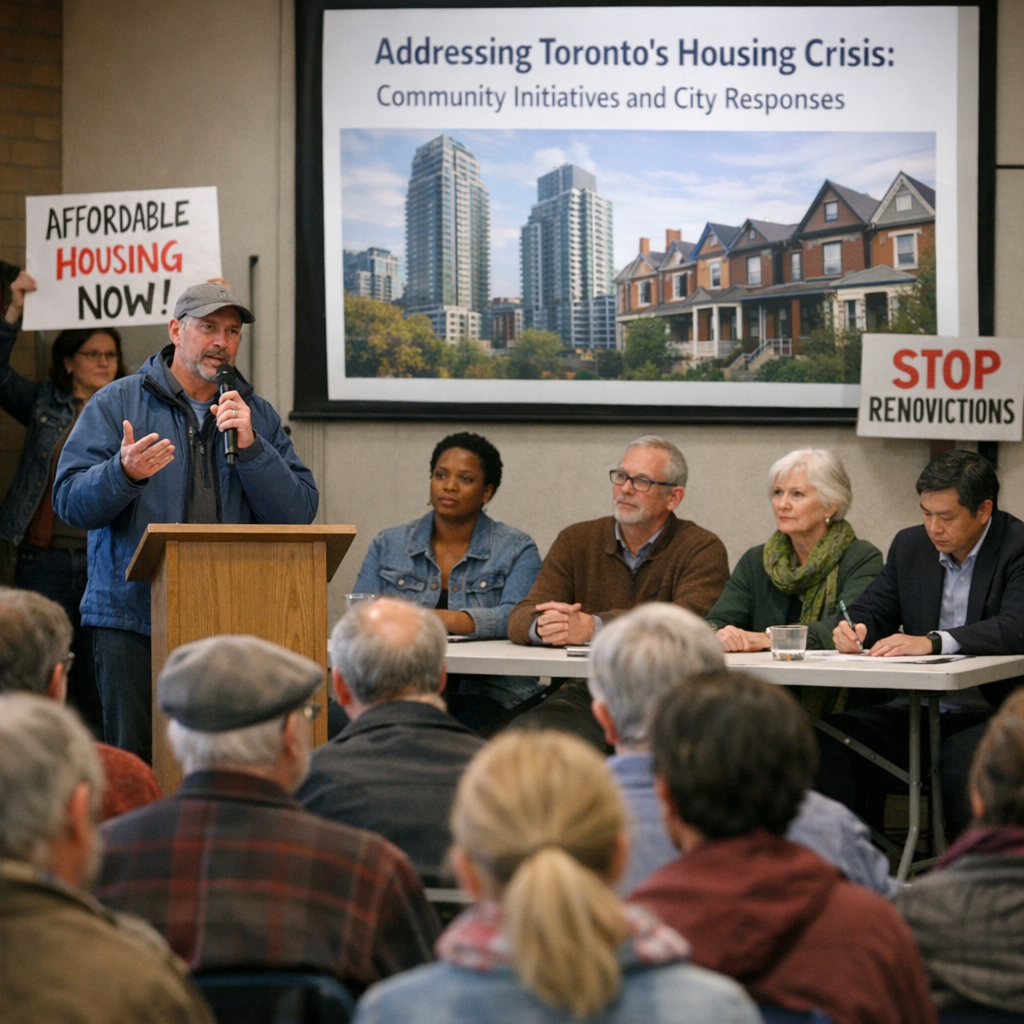
Toronto’s housing crisis remains a pressing issue, with rising homelessness and a shortage of affordable housing options. Recent data from the 2024 Street Needs Assessment indicates a significant increase in homelessness, with over 15,000 individuals experiencing homelessness in October 2024, compared to 7,300 in 2021. This surge underscores the urgent need for comprehensive strategies to address housing insecurity in the city.
Community-Led Initiatives
In response to these challenges, various community organizations have stepped up to provide immediate relief and advocate for long-term solutions. One notable initiative is Community Fridges Toronto (CFTO), a network of public fridges offering free food to those in need. Established to support individuals facing food insecurity, CFTO operates several fridges across the city, maintained by volunteers and stocked through community donations.
Another innovative approach is the development of SolveTO, a civic technology web application launched in February 2026. Created by local developer Ahmed Nadar, SolveTO enables residents to report municipal infrastructure issues directly to the city’s 311 service and relevant city councillors. By streamlining the reporting process, this platform empowers citizens to actively participate in maintaining and improving their neighborhoods.
City’s Strategic Responses
Recognizing the severity of the housing crisis, the City of Toronto has implemented several strategic plans aimed at enhancing community safety and well-being. The SafeTO initiative, a 10-year plan endorsed by the City Council, focuses on transitioning from reactive emergency responses to proactive prevention and public health approaches. Key components of SafeTO include expanding the Toronto Community Crisis Service to collaborate with the Toronto Transit Commission (TTC) in addressing mental health-related calls.
Additionally, the Downtown East Action Plan targets intersecting challenges such as poverty, homelessness, and substance use in specific neighborhoods. This plan emphasizes coordinated city services to create safe, inclusive communities and serves as a model for addressing complex urban issues.
Collaborative Efforts and Future Outlook
The collaboration between community organizations and the city government highlights a multifaceted approach to tackling Toronto’s housing crisis. While community-led initiatives provide immediate support and foster grassroots engagement, city strategies aim to implement systemic changes for long-term solutions. Continued partnership and open dialogue between all stakeholders are essential to develop sustainable strategies that ensure safe and affordable housing for all Toronto residents.