

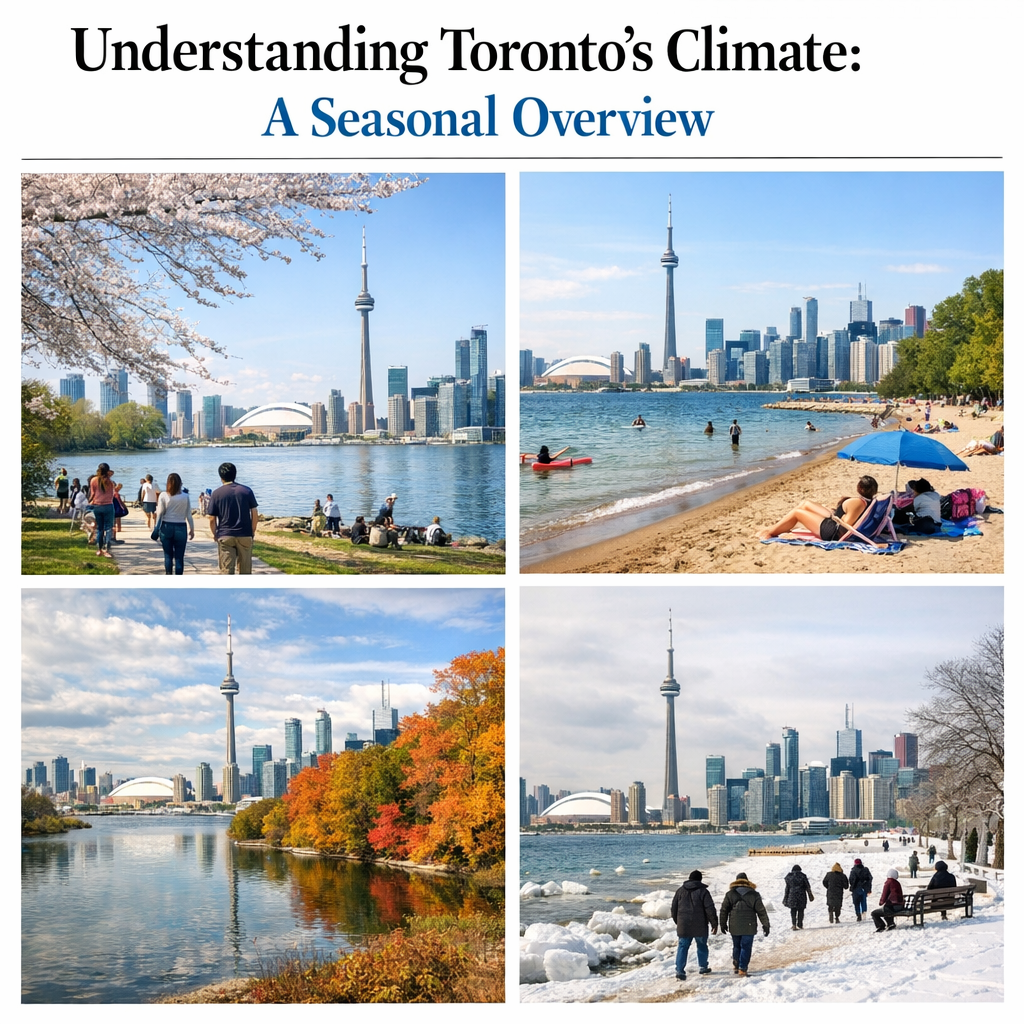
Toronto’s climate is characterized by four distinct seasons, each offering unique weather patterns and experiences. Understanding these seasonal variations is essential for residents and visitors alike.
Winter (December to March)
Winters in Toronto are cold and snowy, with average temperatures ranging from -8°C to -4°C. Snow is common, with depths exceeding 1 cm on approximately 65 days each year. The city’s proximity to Lake Ontario moderates temperatures slightly, but wind chills can make it feel much colder.
Spring (March to May)
Spring is a transitional season marked by fluctuating temperatures and increased precipitation. Average lows range from -2°C to 10°C, while highs can reach up to 20°C. Rainfall is frequent, often in the form of light to moderate showers, with occasional thunderstorms in late spring.
Summer (June to August)
Summers are warm and humid, with average highs between 25°C and 28°C. July is typically the hottest month, with temperatures occasionally exceeding 30°C. Humidity levels can make it feel even warmer, and short, intense thunderstorms are common during this period.
Fall (September to November)
Fall brings cooler temperatures and vibrant foliage. Average highs decrease from 24°C in September to 8°C in November. The season is generally pleasant, though temperatures can drop sharply as winter approaches.
Impact of Climate Change
Climate change is influencing Toronto’s weather patterns. The city is experiencing warmer temperatures, more intense storms, and increased precipitation. These changes can lead to health risks, infrastructure damage, and environmental challenges.
Understanding Toronto’s seasonal climate is crucial for preparedness and adaptation, especially as climate change continues to affect local weather patterns.